
Navigating Economic Resilience and Regional Integration
The third week of October 2026 has brought forward a wave of transformative milestones across Central Asia, characterized by sovereign rating upgrades, strategic monetary maneuvers, and sweeping structural reforms in trade, transport, and agriculture. As regional governments balance domestic inflationary pressures with global supply chain shifts, nation-states are doubling down on institutional transparency, public-private partnerships, and green energy investments.
From Bishkek securing a historic sovereign credit rating upgrade to Tashkent overhauling its fuel distribution and transit networks, and from Astana concluding a robust grain harvest to Ashgabat and Dushanbe reinforcing multilateral trade corridors, Central Asia continues to assert its strategic agency. This weekly review synthesizes the key developments published on CentralasianLIGHT.org between October 12 and October 18, 2026, offering an in-depth analytical panorama of the political economy shaping the heart of Eurasia.
1. Kyrgyzstan: Macroeconomic Stabilization and Sovereign Rating Upgrades
Moody’s Upgrades Kyrgyzstan’s Sovereign Credit Rating to B2 with Stable Outlook
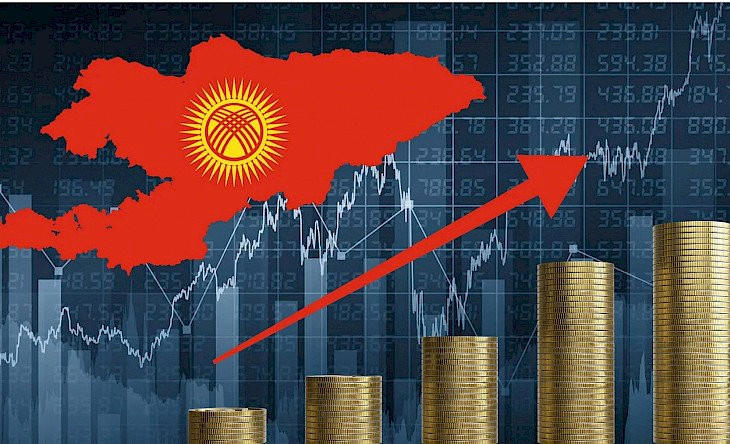
In a milestone achievement for the republic's financial sector, Moody’s Ratings upgraded Kyrgyzstan’s long-term issuer and senior unsecured debt ratings to B2 from B3, affirming a stable outlook. This rating action reflects sustained improvements in fiscal metrics, robust post-pandemic economic growth, and strengthened external shock resistance. Key drivers behind the upgrade include disciplined public financial management, the accumulation of strategic gold reserves, and an expanding domestic revenue mobilization base.
For Bishkek, the B2 rating serves as an institutional validator of structural reforms, significantly lowering borrowing costs for large-scale state infrastructure projects and opening doors for broader institutional investor participation. Economists note that enhanced creditworthiness will facilitate access to international capital markets, allowing the Kyrgyz Republic to finance vital energy and transport projects with lower risk premiums.
Agricultural Expansion: Bumper Harvests in Grains and Vegetables
Simultaneously, Kyrgyzstan’s real economy received a strong boost from the agricultural sector. Official reports published during the week confirmed a substantial increase in crop yields for 2026, with total grain threshing reaching approximately 2.5 million tons. State-backed programs focusing on irrigation rehabilitation, subsidized high-yield seeds, and the expansion of organic farming acreage proved decisive.
This agricultural productivity directly bolsters national food security amidst global commodity price volatility. Furthermore, the robust harvest supplies essential raw materials for domestic processing industries, curbing import dependencies and generating rural employment. Bishkek's dual focus on macroeconomic stability and primary sector productivity underscores a comprehensive approach to sustainable development.
2. Uzbekistan: Energy Privatization, Monetary Strategy, and Transit Megaprojects
Overhauling the Energy Sector: LPG Privatization and Green Tenders
Uzbekistan dominated regional economic headlines this week with radical restructuring initiatives across its fuel and energy complex. During an open dialogue with investors in Tashkent, President Shavkat Mirziyoyev announced that the distribution and retail supply of liquefied petroleum gas (LPG) will be entirely transferred to the private sector nationwide by 2027.
Parallel to the LPG privatization, the government announced the signing of $4.7 billion in new energy agreements and unveiled plans to launch public tenders for six major solar and wind generation facilities. Regulators are also expanding private investment channels into upstream geological exploration and deep hydrocarbon processing.
Analytical Insight: These measures reflect Tashkent's deliberate strategy to dismantle state monopolies, alleviate administrative and budgetary burdens, and leverage market-driven efficiencies. Transferring LPG distribution to private entities aims to eliminate chronic supply bottlenecks in remote rural provinces, while foreign capital injection into renewable energy helps offset growing domestic electricity consumption without expanding sovereign debt liabilities.
Central Bank Bolsters Reserves with 8 Tonnes of Gold
In monetary policy, the Central Bank of Uzbekistan reinforced its external financial buffers by acquiring an additional 8 tonnes of gold during the third quarter of 2026. This tactical accumulation solidifies Tashkent's standing among the world's leading sovereign bullion buyers. Maintaining a high proportion of gold in international reserves acts as an effective shield against global macroeconomic instability, supports national currency stability, and underwrites investor confidence during the country's ongoing structural transformations.
A 2030 Vision for Transit and Logistics Infrastructure
Reinforcing its geoeconomic ambitions, the Government of Uzbekistan published a comprehensive roadmap for transit and logistics development through 2030. The multi-billion-dollar initiative targets the modernization of core transit corridors, the expansion of multimodal freight terminals, and the optimization of border-crossing procedures along the Trans-Caspian route. By streamlining cargo throughput, Tashkent aims to cement its status as the principal connectivity bridge connecting China, South Asia, and the European Union, diversifying its export revenues away from raw commodities toward high-value logistics services.
3. Kazakhstan: Agricultural Triumph and Food Security Leadership
Conclusion of the 2026 Grain Harvest: 23 Million Tons
Kazakhstan’s Ministry of Agriculture officially wrapped up its autumn harvesting campaign, recording a bountiful yield of over 23 million tons of grain. Despite localized weather anomalies and rising agricultural input costs, the implementation of advanced agrotechnical methods and state-sponsored machinery leasing programs ensured high threshing efficiency.
As a traditional breadbasket of Eurasia, Kazakhstan's robust harvest secures internal food reserves while reaffirming its export dominance across Central Asia, the South Caucasus, and traditional Middle Eastern markets. The steady supply of Kazakh grain remains a stabilizing factor for regional food security, shielding neighboring import-dependent economies from external supply shocks.
4. Turkmenistan: Capping Regional Logistics and Global Climate Diplomacy
Showcasing Caspian Transit Potential at TransLogistica Kazakhstan 2026
Turkmenistan projected its expanding transport capabilities onto the regional stage during the TransLogistica Kazakhstan 2026 exhibition. A high-level Turkmen delegation presented the comprehensive maritime, rail, and road infrastructure centered around the International Port of Turkmenbashi.
Discussions centered on optimizing freight transit along the North-South and East-West corridors. Turkmenistan's active diplomacy in regional transport forums illustrates a pragmatic opening of its economy, designed to attract foreign direct investment into Caspian port infrastructure and position Ashgabat as an indispensable node in Eurasian supply chains.
5. Tajikistan: Fostering Private Investment and Industrial Modernization
Advancing Public-Private Partnerships and SME Dialogue
Tajikistan hosted a national investment forum aimed at scaling up public-private partnerships (PPP) and improving the regulatory climate for small and medium-sized enterprises (SMEs). Deliberations focused on targeted tax incentives, stronger legal protections for foreign investors, and expanding private capital participation in green energy generation and agricultural processing.
Dushanbe’s concerted push toward economic liberalization is designed to diversify its industrial base, reduce external debt vulnerabilities, and stimulate non-traditional export sectors. By fostering a predictable business-government dialogue, Tajikistan is steadily integrating itself into broader regional value chains.
Conclusion: A Collaborative Horizon
The events of October 12–18, 2026, illustrate a region actively engineering its own economic destiny. Whether through Kyrgyzstan's hard-won credit rating upgrade, Uzbekistan's bold privatization and logistics overhauls, Kazakhstan's agricultural prowess, Turkmenistan's transport integration, or Tajikistan's regulatory reforms, Central Asia is displaying institutional maturity and adaptability. As these sovereign initiatives take root, the nations of the region are proving increasingly capable of transforming geopolitical challenges into sustainable, long-term economic opportunities.
CentralasianLIGHT.org
October 18, 2026