
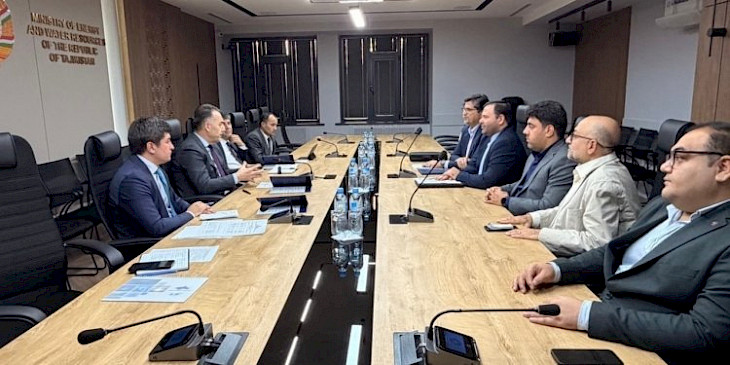
A meeting between Tajikistan's Minister of Energy and Water Resources, Daler Juma, and Sajod Hamidi, CEO of the Iranian company Sangob, took place in Dushanbe. The two discussed the current state and prospects for further cooperation in the energy sector, focusing on the activities of the Sangtuda-2 Hydroelectric Power Plant (HPP), Avesta.tj reported.
Daler Juma noted that the construction and operation of the plant is an important example of economic and energy cooperation between Tajikistan and Iran. Sangob representatives, in turn, confirmed their readiness to continue mutually beneficial cooperation.
The Sangtuda-2 HPP is of particular importance to bilateral relations, as it has become one of the largest joint energy projects between Tajikistan and Iran. Iran played a significant role in the financing and construction of the plant, the first unit of which was commissioned in 2011, and the second in 2014.
The project demonstrated the potential for major infrastructure initiatives between the two countries and created the foundation for further cooperation in the energy sector.
The current negotiations demonstrate Dushanbe and Tehran's commitment to maintaining this project as a long-term platform for economic cooperation. For Tajikistan, a partnership with Iran is of interest in terms of attracting investment, technology, and expertise in the development of hydropower, a key sector of the national economy.
For Iran, participation in the Tajik energy sector simultaneously opens opportunities to strengthen its economic presence in Central Asia.
More broadly, energy cooperation is taking on added significance amid growing demand for electricity in the region and Tajikistan's efforts to increase electricity production and exports. Therefore, further development of the Sangtuda-2 HPP can be viewed not only as a matter of efficient operation of a specific facility but also as part of a larger Tajik-Iranian economic partnership.
Maintaining stable cooperation around the plant could create the conditions for new joint projects in energy and other infrastructure sectors.
Thus, the meeting in Dushanbe demonstrates that the Sangtuda-2 HPP continues to be a symbol of practical cooperation between Tajikistan and Iran. If the parties can infuse this new phase of cooperation with additional investment and technological momentum, the energy partnership could become one of the most sustainable components of the bilateral relationship.
CentralasianLIGHT.org
September 3, 2026