
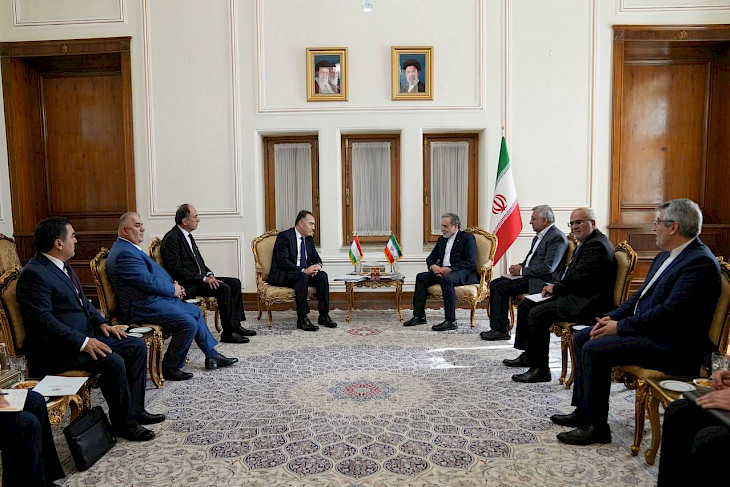
On August 15, 2026, a Tajik delegation led by Energy Minister Daler Juma held talks with high-ranking Iranian officials in Tehran. One of the key outcomes was an agreement to draft a long-term contract for the supply of Iranian petroleum products to Tajikistan, Asiaplus.tj reported.
At the meeting with Iranian Oil Minister Mohsen Paknejad, the parties discussed the supply of diesel and aviation fuel, as well as crude oil, as well as the possibility of applying preferential prices for the Tajik market. The parties also discussed transportation and logistics issues.
According to Iranian media, a working group has already begun work to draft the long-term agreement. It is envisaged that Iran will partially meet Tajikistan's petroleum product needs and will also be able to supply crude oil to Tajik refineries.
Furthermore, Dushanbe proposed creating an association of Persian-speaking countries and regions, which could broaden bilateral relations across cultural and economic boundaries.
The agreements are of great importance for Tajikistan, which lacks significant oil reserves and relies on external fuel supplies. A long-term contract with Iran could diversify its sources of petroleum products and reduce Dushanbe's dependence on traditional suppliers.
Logistics is of particular importance. Iran's geographic distance from Tajikistan makes the cost and reliability of transportation key to the efficiency of future supplies. Therefore, the creation of a sustainable transport route will be no less important than the supply agreement itself.
The initiative to unite Persian-speaking countries and regions is primarily long-term. If implemented, it could contribute to the expansion of trade, cultural, and humanitarian ties between the states of the region.
CentralasianLIGHT.org
August 17, 2026