
Key results
The political calendar of Central Asia in mid-to-late September 2026 was marked by intensive multilateral diplomacy, pivotal developments in intra-regional infrastructure, institutional consolidation, and major security incidents. Among the primary diplomatic events was the historic first Central Asia–South Korea Summit at the heads of state level in Seoul, as well as the participation of regional leaders in the 81st Session of the United Nations General Assembly (UNGA) in New York and the 18th BRICS Summit in New Delhi.
On the domestic front, the aftermath of the August 23 parliamentary elections in Kazakhstan and the formation of a new unicameral Kurultai (Assembly) continued to reshape the country's political landscape, until a tragedy during naval exercises in the Caspian Sea led to national mourning and large-scale investigations of the command staff, including the removal of the country's defense minister and the prosecution of several high-ranking officials in the Kazakh Armed Forces. Meanwhile, the accident at the Syrdarya Thermal Power Plant (TPP) in Uzbekistan revealed the continuing vulnerability and high interdependence of the Unified Energy System of Central Asia.
1. Multilateral Diplomacy and External Partnerships
The Inaugural Central Asia–South Korea Summit (Seoul, Sept 13–16)
A major strategic shift took place in Seoul: the leaders of Kazakhstan, Kyrgyzstan, Tajikistan, Turkmenistan, and Uzbekistan met with South Korean President Lee Jae-myung for the first-ever heads of state summit in the "C5 + South Korea" format. Upgrading cooperation from the ministerial to the presidential level, the participants concluded the meeting with the adoption of the Seoul Declaration.
-
Kazakhstan & Critical Minerals: President Kassym-Jomart Tokayev held bilateral talks with President Lee, elevating relations to an enhanced comprehensive strategic partnership. Discussions focused on supply chain security for critical raw materials, nuclear energy cooperation, and technological integration. Kazakhstan matched its vast uranium and rare-earth element reserves with South Korea's industrial processing capabilities.
-
Uzbekistan's New Silk Strategy: President Shavkat Mirziyoyev paid a state visit to Seoul ahead of the multilateral summit, signing 13 bilateral agreements covering high-speed rail development, logistics, artificial intelligence, defense technology, and trade finance. Mirziyoyev presented a concept linking Central Asia's resource base and consumer market with South Korea's high-tech industrial complex. Environmental cooperation regarding the Aral Sea basin and water resource management was also formalized.
Engagements on Global Platforms: UNGA and BRICS
-
Kyrgyzstan's Initiatives on UN Reform and Climate: Speaking on September 22 at the General Debate of the 81st Session of the UNGA in New York, President of Kyrgyzstan Sadyr Japarov delivered a speech focused on reforming the international system and environmental protection.
-
UN Reform and Sanctions Regime: Japarov called for strengthening the authority of the UN, stating that the organization's decisions must be implemented without delay and that the right to impose sanctions should not be monopolized by individual states. He proposed creating a transparent Registry for Monitoring Compliance with UN Decisions.
-
Climate Threat and Glaciers: The head of Kyrgyzstan drew attention to the critical state of Lake Issyk-Kul and the melting of Tian Shan glaciers (which have lost over 30% of their volume in 70 years). Japarov announced Kyrgyzstan's readiness to allocate $10 million from the state budget to the Climate Fund and urged the global community to adhere to the principle of "amanat"—the careful preservation of nature for future generations.
-
-
Uzbekistan at the UN General Assembly: Speaking at the UNGA in New York on September 23, Head of the Presidential Administration Saida Mirziyoyeva highlighted Central Asia's diplomatic progress in resolving historical border and water disputes. Tashkent officially requested support for its candidacy for a non-permanent seat on the UN Security Council for the 2035–2036 term, advocating for a stronger regional voice in resolving international conflicts.
-
Kazakhstan at BRICS+: President Tokayev attended the 18th BRICS+ Summit in New Delhi (September 12–13). Addressing the "BRICS Plus" plenary session, Tokayev characterized the grouping as an important venue for mitigating economic fragmentation rather than a geopolitical counterweight to Western institutions. On the sidelines of the summit, Tokayev held bilateral talks with Indian Prime Minister Narendra Modi on trade corridors and energy cooperation.
2. Regional Infrastructure, Energy, and Logistics
Disruption in the Central Asian Unified Energy System (September 25)
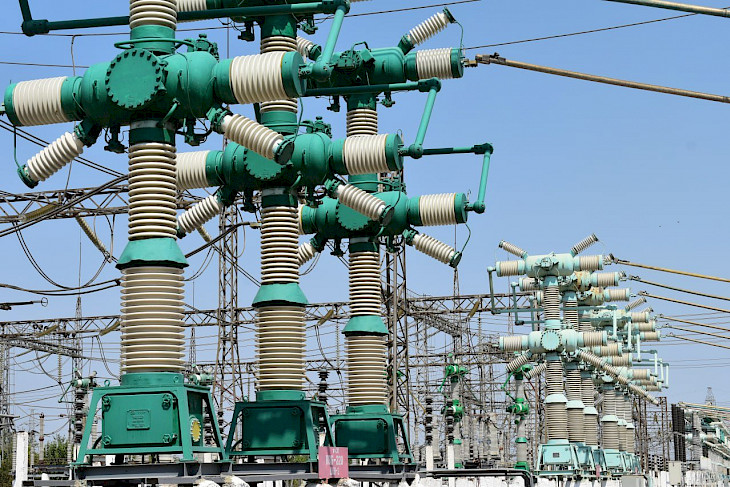
On the morning of September 25, a sudden technical breakdown at the new Syrdarya Thermal Power Plant (TPP) in Uzbekistan led to an emergency shutdown of 1,600 MW of generating capacity. The loss of generation triggered a sharp surge in power flow across the regional grid, causing a temporary separation of the "North–South" transit line in Kazakhstan and restricting power supplies to consumers in southern Kazakhstan by 962 MW.
Although automated emergency protection systems (frequency load shedding and emergency control automation) successfully prevented a total blackout—restoring parallel operation within 41 minutes—the incident exposed the structural vulnerabilities of the Central Asian Unified Energy System. The outage underscored the need to build flexible reserve capacities and modernize cross-border power lines as demand grows.
Cross-Border Trade & Logistics Facilities
-
Kyrgyzstan–China–Pakistan Corridor: On September 10–15, the National Investment Agency of Kyrgyzstan finalized plans to build the $100 million "Sary-Tash" international transport and logistics center near the border with China. The center is designed to streamline the transit of Chinese cargo through Uzbekistan and Afghanistan toward Pakistan under a transit trade agreement signed with Islamabad earlier in September.
-
Tajikistan's Infrastructure Ambitions: Construction commenced in the Shohmansur district on the Dushanbe Tower complex. Envisioned to reach a height of 340 to 400 meters, the project aims to become the tallest architectural structure in Central Asia.
3. Institutional Reform and Domestic Politics
Kazakhstan: Transition to the Kurultai Model
Following the August 23 parliamentary elections—the first held under the new Constitution adopted in the March 15 referendum—the political consolidation of Kazakhstan's new unicameral Kurultai entered its final phase.
-
Political Landscape: The newly formed pro-presidential Ädilet party (which absorbed the ruling Amanat party) secured a constitutional supermajority, winning 71.2% of the vote and 110 out of 145 seats.
-
Institutional Restructuring: According to the revised Constitution, the bicameral parliament (Mazhilis and Senate) was fully replaced by the Kurultai. Former Head of the Presidential Administration Aibek Dädebai assumed leadership of the Kurultai. The creation of the Vice Presidency (filled by former State Counselor Erlan Karin) and the presidentially appointed Halyk Kenesi (People's Council) completed the formation of a super-presidential executive structure aimed at accelerating decision-making.
                     President of the Republic of Kazakhstan
                                │
       ┌────────────────────────┼────────────────────────┐
       ▼                        ▼                        ▼
Vice President          Unicameral Kurultai       Halyk Kenesi
 (Erlan Karin)          (145 seats / Ädilet)    (126 presidential
                                                    appointees)
Caspian Tragedy and Personal Command Responsibility
On September 24, during the Khazar Qorgany–2026 naval exercises off the coast of Mangystau Region, sudden storm-force winds swept 17 service members into the Caspian Sea. The tragedy resulted in 14 confirmed fatalities, with three rescued. President Tokayev declared September 25 a National Day of Mourning.
Law enforcement agencies reacted swiftly: five officers were detained, including the First Deputy Commander-in-Chief of the Kazakh Navy, two unit commanders, and vessel commanders, on charges of negligence and violation of navigation safety rules. More than 30 people were questioned. Holding senior leadership accountable sets a strict precedent for command responsibility and has already led to a comprehensive reassessment of safety protocols and decision-making during adverse weather conditions across the entire Armed Forces of Kazakhstan.
4. Media Economics and Legislative Regulation
Defamation Legislation and Freedom of Speech
Media regulatory issues remained at the center of public attention across the region. In Kyrgyzstan and Kazakhstan, legal provisions regarding defamation (libel and slander) continue to draw close scrutiny from civil society and international observers.
While state authorities emphasize the necessity of protecting citizens' honor and dignity as well as combating digital disinformation, human rights organizations point to the risk of a "chilling effect" on investigative journalism due to harsh penalties. The debate highlights the complex search for a balance between reputation protection and freedom of expression amid the transformation of regional media, the shift to digital platforms, and algorithmic content distribution.
Key Results & Strategic Forecast
-
Multi-Vector Pragmatism: Central Asian states continue to diversify their external economic ties, balancing between traditional partners (Russia and China) and strengthening relationships with middle powers like South Korea, as well as the BRICS block.
-
Infrastructure Vulnerability: The September 25 power grid incident demonstrated that regional integration requires major investments in core energy security, grid balancing, and updating infrastructure assets.
-
Consolidation of the State Apparatus: Kazakhstan's transition to the Kurultai structure and the firm personnel consequences following the Caspian Sea tragedy signal a course toward administrative restructuring alongside heightened demands for discipline and accountability at the executive level.
Photo: Syrdarya TPP (Gov.uz)
CentralasianLIGHT.org
September 27, 2026