
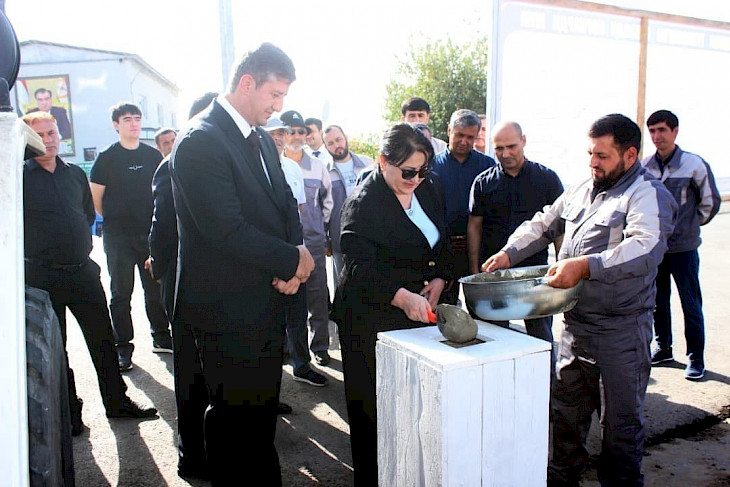
In the Jaikhun district of the Khatlon region of Tajikistan, construction of a new oil processing line with a capacity of 50 thousand tons of petroleum products per year has begun. The first stone was laid on September 6 on the territory of Salosa LLC. It was laid by Deputy Minister of Energy and Water Resources of Tajikistan Sharifa Khudobakhsh and Chairman of the Jaykhun District Azizullo Alizoda, Asiaplus.tj reported.
After installing modern equipment, the enterprise, which today primarily produces bitumen, plans to also produce gasoline and diesel fuel. The company has been operating since 2003, developing several oil fields in the Khatlon region and employing more than 100 specialists. The project is of strategic importance for the country, since Tajikistan remains a major importer of petroleum products.
The launch of the new line is important primarily against the backdrop of Tajikistan’s continued dependence on imports of fuel and lubricants. In 2025, the country purchased 1.21 million tons of petroleum products abroad for $959.3 million, with about 84% of supplies coming from Russia. This means that domestic production is still able to cover only a limited part of the economy's needs.
Dependence on imports simultaneously makes the domestic market vulnerable to global oil prices, refining costs, logistics costs and foreign trade restrictions. The high cost of fuel and lubricants directly affects transportation costs, agriculture, construction and, ultimately, the prices of most goods.
The new Salosa line with a capacity of 50 thousand tons will not solve the problem of dependence, but it is a step in the right direction. Increasing our own processing capacity will allow us to partially replace imports and increase the stability of the domestic market. At the same time, it is fundamentally important for Tajikistan not only to increase oil production, but also to create a full-fledged chain of “extraction - refining - fuel production”.
In the long term, increased domestic processing may reduce the economy's sensitivity to external price shocks. However, given the scale of current imports, the country will need significantly larger capacity and additional investment to significantly reduce its dependence on foreign supplies of fuel and lubricants.
CentralAsianLIGHT.org
September 7, 2026