
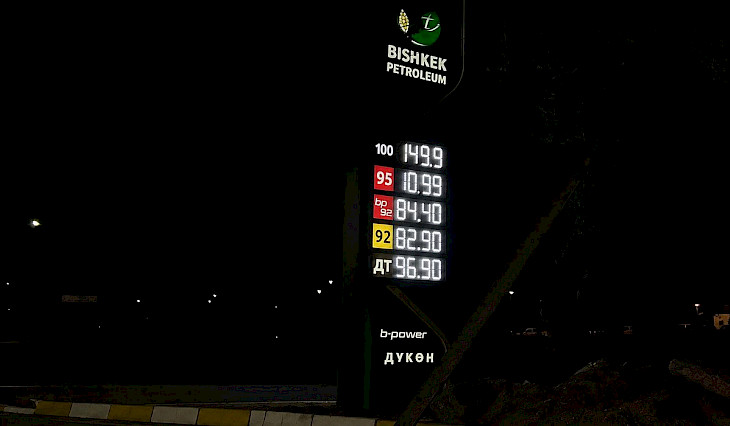
According to the latest report from the Eurasian Fund for Stabilization and Development (EFSD), inflation in Kyrgyzstan could exceed the target (5-7%) by 2-3 percentage points. According to 24.kg, the main driver of this price acceleration is the external energy shock caused by the ongoing shortage in the Russian fuel market and the escalating conflict in the Middle East, which has pushed Brent crude oil prices to $107 per barrel. By August 2026, annual inflation in the country will already have reached 12%.
Additional inflationary pressure is being exerted by the rising cost of grain imports from Russia due to the rerouting of logistics flows, as well as by the tightening of the US Federal Reserve's policy (increasing the interest rate to 3.75-4%), which is reducing demand for non-monetary gold—Kyrgyzstan's key export asset. Despite these risks, the republic's GDP growth by August was 11%, supported by large-scale public investment in the construction of the Kambarata-Ata Hydroelectric Power Station (HPP) and the China-Kyrgyzstan-Uzbekistan railway.
The current situation poses a dual challenge for the Kyrgyz economy. On the one hand, double-digit GDP growth (+11%) demonstrates strong domestic demand and public capital activity in the infrastructure sector. On the other hand, dependence on imported fuel and food makes the republic extremely vulnerable to external volatility.
Subsidizing fuel costs to contain prices will inevitably increase the burden on the national budget, widening the current account deficit (projected at -24.7% of GDP). Under these circumstances, the key stabilizing factor for Bishkek will be an increase in gold exports and the acceleration of regional infrastructure projects capable of offsetting the tough external financial conditions.
CentralasianLIGHT.org
October 7, 2026