
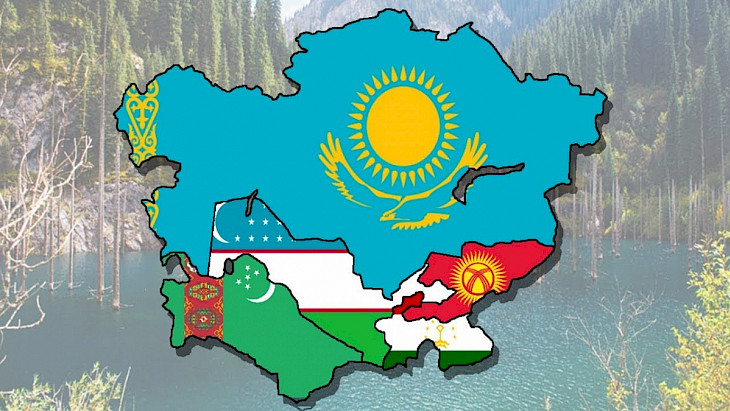
The countries of Central Asia have completed the first half of 2026 with results that allow us to understand not only current dynamics but also the processes that will shape the region's economic development in the second half of the year.
After several years of accelerated growth, the region's economy is gradually returning to a more balanced pace. However, this does not mean a weakening of economic activity. On the contrary, the first six months of the year show that Central Asia is increasingly relying on multiple sources of growth—infrastructure projects, domestic consumption, industry, transport connectivity, and international capital inflows.
According to the Eurasian Development Bank, the combined size of the Central Asian economy in 2026 will exceed USD 600 billion for the first time, with GDP growth exceeding 6.5%. The European Bank for Reconstruction and Development estimates this growth at 5.6%, and the World Bank indicates that high growth rates will continue despite the influence of external factors, including the situation in commodity markets and a slowdown in major trading partners. The main drivers remain investment in infrastructure and energy, construction, service sector development, domestic demand, and persistently high gold prices, which support export revenues for several countries in the region.
Kazakhstan remains one of the most illustrative examples. Although GDP growth in the first quarter was 4.1%—lower than last year's figures due to temporary disruptions in oil production and export logistics restrictions—financial results demonstrate economic resilience. Construction, services, and investment continue to offset the impact of the oil sector, and international organizations continue to forecast economic growth of 4.6-5.5% for the year.
Public finance dynamics remain particularly notable. In the first half of the year, Kazakhstan's national budget revenues increased by 24.6%, reaching 8.5 trillion tenge (approximately USD 18 billion), while tax revenues increased by more than 29%.
"The positive revenue dynamics were influenced by rising prices for key export commodities, as well as increased foreign trade activity." "Furthermore, according to the electronic invoice information system, sales turnover increased by almost 12%, or 10.8 trillion tenge," said Kazakhstan's Vice Minister of Finance, Yerzhan Birzhanov, at a government meeting.
According to Birzhanov, the formal sector of the economy is also expanding. "The number of businesses, including the self-employed, reached 2.9 million, an increase of more than 499,000 since the beginning of the year. The number of VAT payers increased by 22,300, reaching 158,200. This is an important result. It demonstrates that tax reform should be viewed not only as a fiscal tool, but also as a mechanism for bringing economic activity out of the shadows," he emphasized.
These data demonstrate that Kazakhstan's economy today relies on more than just the raw materials sector. The growth of the tax base, the increase in the number of registered businesses, and the digitalization of government processes are becoming additional sources of resilience, especially in the face of volatility in global commodity markets.
A similar trend is observed in Uzbekistan, although the growth structure is different. The country remains one of the fastest-growing economies in the region. In the first quarter, GDP increased by 8.7%, driven by strong domestic demand, remittances, and growth in the services, industry, and construction sectors. The latter grew by 15.5% year-on-year. Ongoing reforms and privatization remain important drivers of economic activity, and inflation is gradually declining.
International financing statistics are no less revealing. According to the Eurasian Fund for Stabilization and Development, from January to June, Uzbekistan received $690 million in approved sovereign financing from international financial institutions, development agencies, and climate funds. This placed the country fifth among the 13 Eurasian countries included in the Fund's study.
Commenting on the updated data, Gennady Vasiliev, Director of the Fund's Partnerships Department, noted the importance of the accumulated analytical base.
"We created the SFD as a tool that consolidates disparate information on sovereign financing in the Eurasian region into a single analytical system. Today, the database covers transactions worth over $300 billion and allows for the analysis of long-term trends, changes in sector priorities, the distribution of funding between countries, and the activities of international financial institutions. Our goal is to provide governments, researchers, and international organizations with open and convenient access to objective data," he said.
For Uzbekistan, this means not only an influx of new resources but also the continued interest of international institutions in projects related to economic modernization, infrastructure development, and government reform.
Kyrgyzstan is demonstrating another development model. While Kazakhstan is focusing on large-scale economic diversification, and Uzbekistan on reforms and investment, Kyrgyzstan continues to actively exploit the potential of major infrastructure projects. In the first quarter, the country's economy grew by 10.1%, and by 12.4% in the January-April period. The main contributors were construction, industry, trade, and the implementation of projects such as the Kambarata-Ata Hydroelectric Power Station-1 and the China-Kyrgyzstan-Uzbekistan Railway. According to estimates by international financial organizations, Kyrgyzstan will maintain one of the highest growth rates in the region through 2026.
This combination of different development models is becoming one of the distinctive features of Central Asia today. While some countries' economies focus on expanding their domestic markets, others are focusing on infrastructure, exports, or attracting international capital. As a result, the region's resilience is no longer driven by a single factor, but by several complementary areas of economic growth.
Tajikistan also maintains high growth rates. The country's economy expanded by 8% year-on-year in the first quarter. The main sources of growth were industry, energy, transport, and large-scale fixed capital investment, which increased by 34%. Hydropower projects, primarily the construction of the Rogun Hydroelectric Power Station, as well as the development of the cement and metallurgy industries, continue to play a significant role. At the same time, inflation remains among the lowest in the region—around 4%—creating additional macroeconomic stability.
At the same time, the country's authorities have already identified key objectives for the second half of the year. At a board meeting of the Ministry of Energy and Water Resources, the sector's performance for January-June was summarized and future priorities were outlined.
"After reviewing the main report, meeting participants and company executives discussed current production issues and identified strategic priorities for the coming quarter, aimed at ensuring stable operation of the energy system and efficient water resource management," the ministry said in a statement.
At the same time, regional energy cooperation continues to develop. In the first six months of the year, Tajikistan's natural gas imports from Uzbekistan reached 126.4 million cubic meters, an increase of 7.3 million cubic meters compared to the same period last year. This reflects both growing economic needs and expanding energy cooperation between countries in the region.
Turkmenistan also reported continued positive momentum. According to official data, the country's GDP grew by 6.3% in the first half of the year, and natural gas production exceeded 39 billion cubic meters. Oil production during the same period exceeded 4.1 million tons.
Capital investment also continues to increase. According to government data, investment in national economic development grew by 4.3%, reaching 16.5% of GDP. Of this total, 45.1% went to production facilities, and 54.9% to social and cultural infrastructure projects.
While the economic models of Central Asian countries vary, the results of the first half of the year reveal several common trends.
First, the region is increasingly investing in infrastructure. New railway routes, hydropower projects, modernization of the transport network, and expansion of energy capacity are becoming the foundation of long-term growth in virtually all countries.
Second, the role of domestic sources of growth is increasing. While just a few years ago, the primary focus was on commodity exports, today the contribution of construction, industry, services, and domestic consumption is significantly increasing. This is particularly evident in Uzbekistan and Kyrgyzstan, where these sectors account for a significant portion of economic growth, while Kazakhstan continues to expand its tax base and stimulate the development of non-commodity sectors.
Third, the region continues to show strong interest from international financial institutions. Sovereign financing, the participation of development banks, and the implementation of major infrastructure projects indicate that Central Asia remains one of the most attractive destinations for long-term investment in Eurasia.
At the same time, factors that will shape the economic agenda in the second half of the year remain. These include the dynamics of global energy and gold prices, the development of trade with key partners, including China and Russia, and the implementation of major infrastructure projects that could provide additional impetus to economic growth.
The first six months of 2026 show that Central Asia continues to strengthen its economic position. Despite differences in the structure of national economies, the region's countries are consistently increasing investment, expanding transport connectivity, modernizing industry and the energy sector, and attracting international financing. It is the combination of these factors, along with the ongoing diversification of economies, that will largely determine Central Asia's development in the second half of the year and form the basis for the region's continued growth.
Author: Gulnara Ragimova, Baku /Trend/
Source: https://imruz.tj/
CentralasianLIGHT.org
August 7, 2026