
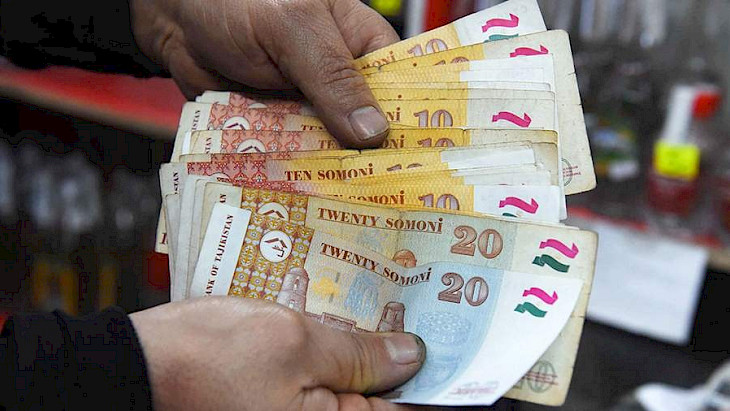
Remittances and other income from Tajik citizens working abroad remain a key driver of domestic demand and economic activity. However, S&P Global Ratings forecasts that their volume will begin to decline in the coming years, which could lead to a slowdown in consumption and economic growth, Asiaplus.tj reported.
According to a new review by the international rating agency, in 2025, the inflow of funds to Tajikistan, including remittances, increased by 48% and exceeded 60% of the country's GDP. When calculated as a percentage of gross national disposable income, this figure amounted to approximately 35%.
S&P notes that rising wages and increased remittances from Tajik citizens working abroad have become important sources of economic growth in recent years. These incoming funds support consumer demand, the goods and services market, and the real estate sector.
At the same time, Tajikistan's dependence on the Russian labor market remains high. More than 90% of remittances come from CIS countries, primarily Russia. Russia is also one of Tajikistan's main trading partners. S&P's review was published on August 14, following the upgrade of Tajikistan's long-term sovereign credit rating from "B" to "B+." The agency expects the country's external economic indicators to continue strengthening in 2026, driven by robust remittance inflows and gold transactions.
Significant external inflows also contributed to the accumulation of international reserves. According to S&P, by the end of May 2026, they reached a record $6.8 billion.
However, the agency forecasts a gradual weakening of remittance flows in the coming years. This is expected to slow private consumption and reduce demand for real estate. As a result, Tajikistan's average GDP growth rate in 2026–2029 could reach approximately 6.2%, and in 2028, approximately 5%, compared to 8.4% in 2025.
The decline in remittances will also impact the balance of payments. According to S&P forecasts, the current account surplus will narrow from 17.7% of GDP in 2025 to 9.5% in 2026 and 0.9% in 2027. From 2028, the agency expects a deficit exceeding 4% of GDP, amid declining remittances and continued significant imports.
This situation highlights the dual role of remittances for the Tajik economy. In the short term, they provide a significant influx of foreign currency, support the consumer market, and help strengthen international reserves. However, the high share of remittances in the economy simultaneously demonstrates the country's structural dependence on external labor markets.
Therefore, the projected decline in remittances is not only an external risk for Tajikistan but also an incentive to accelerate economic diversification. The development of industry, exports, processing, energy, and new economic sectors will gradually reduce the dependence of household incomes and economic growth on labor migration. In this case, the current high volumes of remittances could be used not only to support consumption but also as a resource for building a more sustainable domestic economy.
CentralasianLIGHT.org
August 19, 2026