
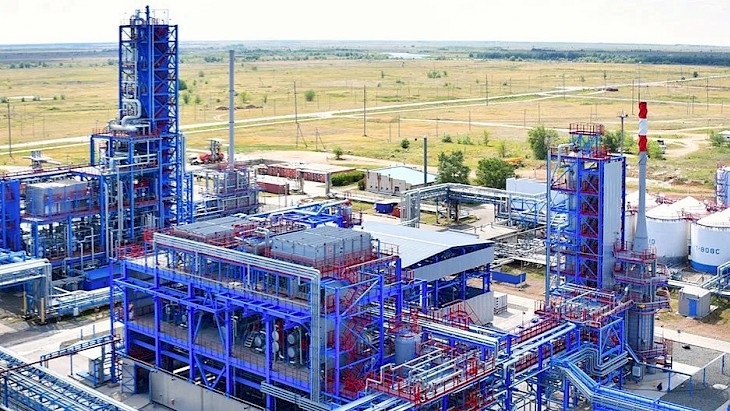
The Kondensat oil refinery in the West Kazakhstan region will accept Russian crude oil for processing, with up to 70% of the gasoline and diesel fuel produced planned to be supplied to the Russian market. This was announced by Kazakh Energy Minister Yerlan Akkenzhenov at a briefing following a government meeting on August 25, Forbes.kz reports.
According to the minister, an agreement has been reached under which up to 30% of in-demand petroleum products—gasoline and diesel fuel—will remain in Kazakhstan, while the remainder will be shipped to Russia. The timing and actual volumes of deliveries will depend, in particular, on the capacity of the railway infrastructure.
Akkenzhenov noted that the Russian side has officially offered to supply the refinery with Russian crude. Oil will be delivered to the facility by rail. Concurrently, work continues at Kondensat to reconstruct and expand production capacity.
The minister also emphasized the absence of direct sanctions risks for the project. Akkenzhenov stated that the company's owner is not included on the sanctions list, so supplies should not face any corresponding restrictions.
This decision is significant amid ongoing tensions in the Russian motor fuel market. Following operational disruptions at several Russian refineries and increased seasonal demand, Russia has begun increasing gasoline imports, including from Kazakhstan. In July, the Condensate Refinery exported gasoline to Russia for the first time.
The diagram shows how the oil and fuel markets of Kazakhstan and Russia remain closely intertwined. For Condensate, access to Russian feedstock and a guaranteed sales market create conditions for increasing utilisation and attracting investment in modernisation. For Russia, supplies from Kazakhstan could become an additional source of motor fuel amid temporary shortages.
At the same time, maintaining sufficient volumes of gasoline and diesel fuel for the domestic market is crucial for Kazakhstan. A share of up to 30% formally constitutes such a reserve, but its adequacy will depend on actual production volumes, domestic demand, and the pace of expansion of the refinery's capacity. Therefore, the project simultaneously represents an economic opportunity for Kazakhstan and requires careful monitoring of the balance between domestic supply and export deliveries.
CentralasianLIGHT.org
August 25, 2026