
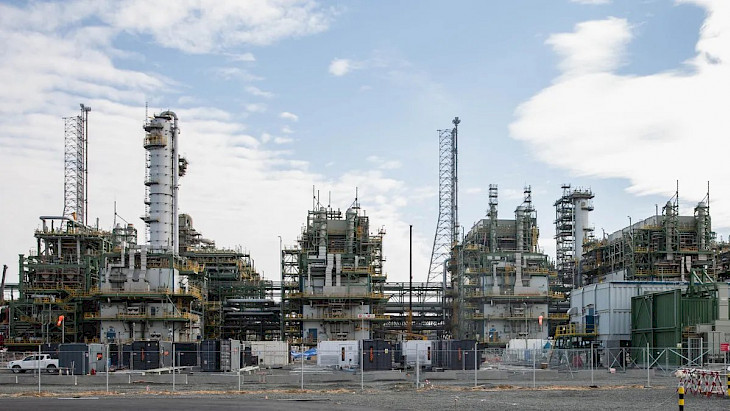
Kazakhstan is considering extending its agreement with American company Chevron to develop the world's largest oil field, Tengiz, beyond 2033. According to Bloomberg, cited by Forbes Kazakhstan, the government expects to receive a one-time payment of approximately $10 billion under the potential deal and increase its stake in the project from the current 20% to 35%. Negotiations are in the early stages, so final terms have not yet been agreed upon.
The agreement to develop Tengiz was signed in 1993 for a period of 40 years. In September 2025, Chevron CEO Mike Wirth confirmed the start of formal negotiations with the Kazakh government regarding the possible continuation of cooperation beyond 2033. Kazakhstan's Ministry of Energy, however, declined to comment on the reports, which are based on anonymous sources.
Chevron currently owns 50% of Tengizchevroil, ExxonMobil 25%, KazMunayGas 20%, and Russia's Lukoil 5%.
The potential deal is of strategic importance for Kazakhstan. Increasing KazMunayGas's stake to 35% would mean increased state participation in one of the country's most important oil assets and, consequently, a higher share of Kazakhstan's future revenues from its operation. A one-time payment of $10 billion, if confirmed, could also significantly increase state financial resources.
However, increasing the state's stake also necessitates additional investment in the project and the assumption of a greater share of the financial and operational risks. Therefore, it is crucial for Kazakhstan to evaluate not only the initial payment but also the long-term value of its participation—future capital expenditures, production volumes, tax revenues, and profit sharing.
The prospect of extending the agreement beyond 2033 also offers Kazakhstan the opportunity to develop a more beneficial model of cooperation with international oil companies, maintaining access to their technology, investment, and management expertise. At the same time, Tengiz remains part of the oil economy, dependent on global prices and export infrastructure.
If negotiations conclude with an agreement under the proposed terms, it could mark an important step in shifting the balance between the state and international investors in Kazakhstan's oil sector. For the country, the key issue will be not only increasing the state's stake but also ensuring sustainable economic returns from Tengiz over the coming decades.
CentralasianLIGHT.org
September 29, 2026