
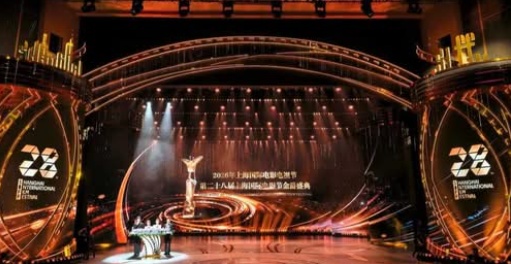



The 28th Shanghai International Film Festival marked a significant milestone not only for world cinema but also for the countries of Central Asia, whose presence this year was one of the most significant in the region's history, reports Khovar.tj.
The festival set a record for the number of world premieres, accounting for 83.67% of the competition program. Two Central Asian directors chose Shanghai to debut their new works: Kazakh director Alibi Mukushev presented "A Story That Has Nothing Good in It," while Kyrgyzstan presented the feature film "Ereze" by director and screenwriter Nargiza Dotieva. Both films were included in the main competition program.
The region's presence was not limited to competition screenings. For the first time, Central Asia also confidently asserted itself in shaping the festival's professional agenda: renowned directors Aktan Arym Kubat and Farkhat Sharipov joined the jury for the key programs.
This result marks a continuation of the steady growth of Central Asian cinema's influence in Shanghai. In recent years, films from the region have consistently strengthened their position at the festival. In 2019, Kazakh director Ermek Tursunov's "Shirakshi: Guardian of Light" attracted attention; in 2023, Shokir Kholikov's Uzbek drama "Sunday" achieved success, followed by resounding victories for Kazakhstan and Kyrgyzstan.
The last two years have been particularly significant: in 2024, the Kazakh film "Divorce" by director Daniyar Salamat won the festival's top prize, the Golden Cup for Best Film, and its lead actress, Amira Omarova, was recognized as Best Actress. In 2025, Kyrgyzstan continued this success, with "Black, Red, Yellow" also winning the Golden Cup for Best Film.
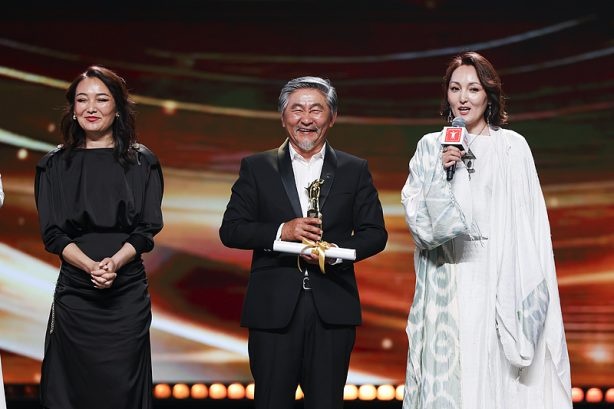
The Kyrgyz film "Black, Red, Yellow" won the Golden Cup for Best Film. (Photo: VCG)
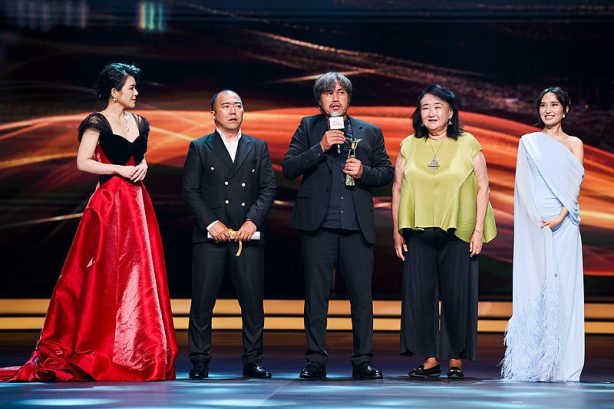
The Kazakh film "Divorce" won the Golden Cup for Best Film. (Photo: VCG)
Experts note that Central Asian cinema is no longer perceived as a regional phenomenon and is increasingly becoming an independent player in the global cultural scene. The Shanghai Film Festival serves not only as a platform for premieres but also as a space for Central Asian cinema to gain international recognition, professional dialogue, and the opportunity to influence the global cinematic agenda.
CentralasianLIGHT.org
June 15, 2026