
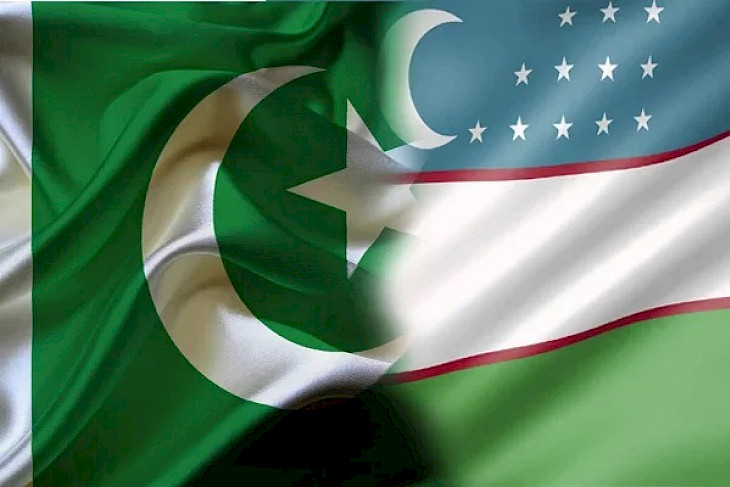
Uzbekistan and Pakistan have reached an agreement in principle to include a transport route through China in the bilateral transit trade system. According to Pakistan Today, citing sources, the relevant changes are planned to be formalized during the upcoming visit of the Deputy Prime Minister of Uzbekistan to Islamabad.
The parties are expected to sign a protocol amending and supplementing the Transit Trade Agreement between the two countries, UzDaily.uz reported.
The document provides for the official inclusion of the Chinese route in the list of approved transport corridors. Under the new scheme, cargo will travel through the Sost dry port in northern Pakistan, then through western China, and on to Central Asian countries, including Uzbekistan.
According to the publication, the expanded list of routes is aimed at ensuring uninterrupted cargo transportation amid the changing regional security situation.
Once the changes come into effect, Pakistan will be able to use the Chinese route to supply goods to Central Asian countries, and Uzbekistan will retain access to Pakistani seaports.
Until recently, the route through Afghanistan was considered the shortest and most cost-effective. However, following the closure of the Torkham and Chaman border crossings in October 2025, this transport corridor effectively ceased to function.
The agreement reflects Tashkent and Islamabad's desire to adapt logistics to new geopolitical realities.
Although the route through China is longer and potentially increases transportation costs, it is seen as a more predictable alternative to the unstable routes through Afghanistan and Iran.
For both countries, this is not only a way to maintain trade flows but also an element of a long-term strategy to diversify transit routes and strengthen economic ties between South and Central Asia.
CentralasianLIGHT.org
July 24, 2026