
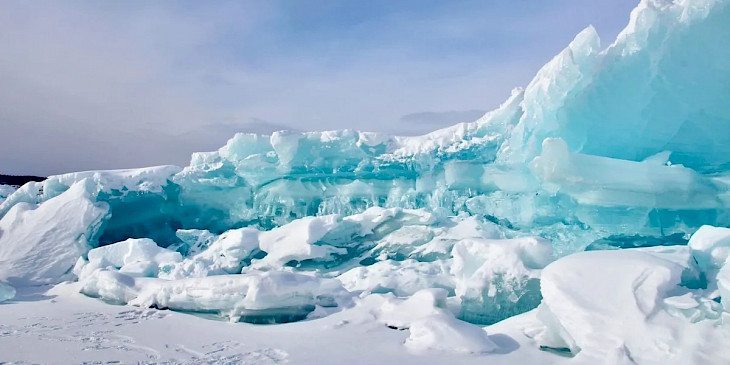
Central Asia is facing an unprecedented climate challenge: temperatures in the region are rising almost twice as fast as global averages. This process is resulting in catastrophically rapid melting of glaciers, which serve as the primary source of fresh water for millions of residents in five countries, Economist.kg reports.
According to UN estimates, the degradation of the cryosphere poses a direct threat to key economic sectors—agriculture, energy, and public water supply systems. The potential economic damage from the water crisis could reach $4 trillion, jeopardizing the sustainable development of the entire region.
Recognizing the scale of the threat, Kyrgyzstan, Kazakhstan, Tajikistan, Turkmenistan, and Uzbekistan have joined forces by adopting a joint climate adaptation strategy. The document calls for the modernization of national monitoring systems and the creation of a unified glacier registry for rapid data exchange.
A significant event was the opening of Central Asia's first isotope hydrology laboratory in Tajikistan. With technical assistance from the IAEA, the facility enables scientists to obtain highly accurate data on water resource dynamics and the rate of ice retreat, which is critical for forecasting.
The region also takes initiatives on the global stage: thanks to the efforts of Central Asian countries, the UN has declared 2025 the International Year of Glaciers. Currently, the priority is to thoroughly study snow cover and establish mechanisms for transboundary water resource management. Gathering a reliable scientific base will form the foundation for strategic development planning for communities whose existence is inextricably linked to the health of mountain ecosystems.
CentralasianLIGHT.org
March 30, 2026