
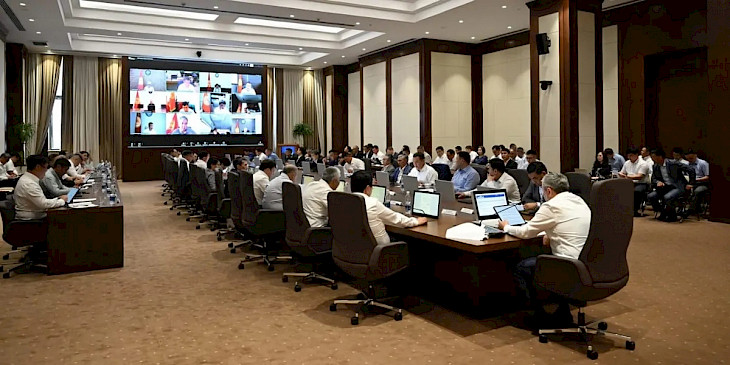
Kyrgyz Cabinet Chairman Adylbek Kasymaliev held a government meeting to discuss the implementation of the action plan for the first half of 2026.
Participants reviewed the progress of 80 key measures and approved an export and marketing strategy for 2026–2030 for industrial cluster enterprises, Economist.kg reports.
The document outlines measures to promote pharmaceutical, jewelry, and agricultural products in foreign markets. The meeting also discussed the development of the energy sector and preparations for major international events.
The Prime Minister emphasized that meeting the approved targets is essential for achieving the goals of the National Development Program until 2030.
Analytical Commentary
The adoption of the new export strategy demonstrates Kyrgyzstan's commitment to shifting from a primary focus on raw material exports to expanding the supply of higher-value-added products. Particular attention is being paid to industrial enterprises, brand development, and the promotion of Kyrgyz products in the markets of the Eurasian Economic Union, China, the Middle East, and South Asia.
One of the most successful examples of foreign trade expansion in recent years has been digital commerce. Kyrgyzstan has become one of the largest suppliers of goods to the Wildberries marketplace among Central Asian countries.
The Ministry of Economy and Commerce of Kyrgyzstan is paying special attention to supporting domestic entrepreneurs operating on the Russian Wildberries marketplace.
Following drone attacks on logistics facilities and warehouses in Russia, which resulted in casualties, damage to infrastructure, and financial losses for sellers, the Ministry, together with Wildberries, has begun developing mechanisms to assist Kyrgyz suppliers.
These issues include compensation for lost or damaged goods, simplification of insurance claim procedures, expedited payments, and maintaining the stable operations of Kyrgyz sellers on the platform.
Thanks to the development of e-commerce, thousands of small and medium-sized businesses have gained the opportunity to directly sell clothing, textiles, household goods, and other products to Russian consumers. The government is consistently improving regulation of this sector, including taxation, logistics, and financial settlements.
An important step was the introduction of mechanisms to compensate for part of the costs of Kyrgyz sellers associated with logistics, certification, and product promotion on foreign e-commerce platforms, which increases the competitiveness of domestic businesses.
The export strategy is also closely linked to ensuring the country's energy sustainability. Kyrgyzstan is almost entirely dependent on imported fuels and lubricants, of which Russia remains the main supplier.
Stable supplies of gasoline, diesel fuel, and other petroleum products are important for industry, agriculture, and the transport and logistics sector. A reliable supply of fuel and lubricants helps reduce exporter costs and improve transportation efficiency, especially as trade through international transport corridors expands.
Taken together, the new export strategy, the development of e-commerce, and the provision of stable energy supplies form the basis for further growth in Kyrgyzstan's non-resource exports and increased competitiveness in foreign markets.
CentralasianLIGHT.org
July 22, 2026