
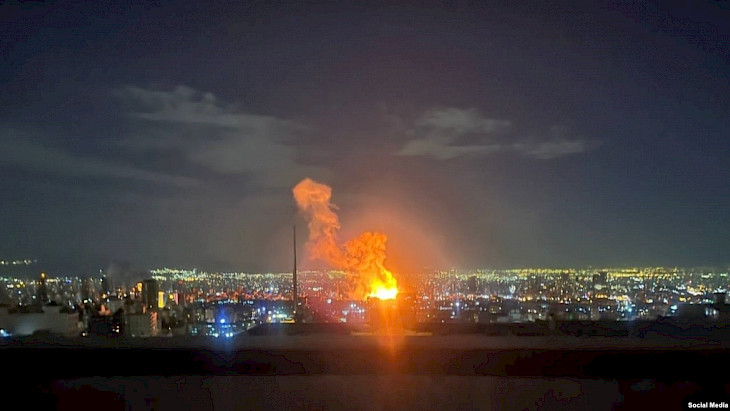
The outbreak of military hostilities in the Middle East and the sharp escalation of tensions around Iran have prompted reactions from Central Asian countries. Kazakhstan, Uzbekistan, Tajikistan, and Kyrgyzstan issued statements expressing concern over the developments, calling for restraint and emphasizing the need to resolve the crisis exclusively through political and diplomatic means.
Kazakhstan
President Kassym-Jomart Tokayev held telephone conversations with UAE President Sheikh Mohamed bin Zayed Al Nahyan and Qatari Emir Sheikh Tamim bin Hamad Al Thani.
In his discussion with UAE leadership, Tokayev expressed concern over the conflict's escalation and regretted that civilian infrastructure had been damaged in military strikes. He emphasized that Kazakhstan views the Emirates as a friendly and brotherly nation and stands ready to provide assistance if needed. Attacks on civilian facilities, he stated, deserve strong condemnation.
During his conversation with the Qatari Emir, the Kazakh leader similarly voiced serious concern about the situation's development and expressed solidarity with the Qatari people. Both sides reaffirmed their commitment to strengthening strategic partnership.
Uzbekistan
The Ministry of Foreign Affairs of Uzbekistan expressed serious concern over the sharp deterioration of the situation, which has led to new tensions across the broader region.
In an official statement, Tashkent called on all parties to exercise restraint and refrain from actions that could lead to dangerous escalation with unpredictable military-political and humanitarian consequences.
Uzbekistan stressed the necessity of resolving the crisis based on international law, exclusively through political-diplomatic means and mutually acceptable dialogue, reaffirming its commitment to strengthening regional stability and security.
Tajikistan
Dushanbe's reaction proved most sensitive to events within Iran. According to information published on the Telegram channel of Iran's embassy in Tajikistan, President Emomali Rahmon sent condolences to Iranian President Masoud Pezeshkian over the death of the country's Supreme Leader Ayatollah Ali Khamenei and several officials.
In his message, Rahmon expressed deep sorrow and highlighted Khamenei's role in developing bilateral relations between Tajikistan and Iran, as well as the Tajik people's solidarity with "friendly and brotherly" Iran. However, at the time of publication, the Tajik presidential press service had not officially released the text of the condolences.
Earlier, Tajikistan's Foreign Ministry stated its "deep concern over the unprecedented escalation" and emphasized that all disputes must be resolved exclusively through negotiations within the framework of international law and the UN Charter. Dushanbe called for urgent measures to prevent further escalation.
Kyrgyzstan
The Ministry of Foreign Affairs of Kyrgyzstan also issued an official statement regarding the regional escalation. Bishkek emphasized that it is observing the growing tensions with deep concern and called on the international community to consolidate efforts toward a peaceful settlement of the conflict.
Kyrgyzstan insists on strict adherence to the UN Charter and norms of international law. Official Bishkek urged the parties to exercise maximum restraint, immediately cease hostilities, and return to constructive dialogue, stressing that resolving the crisis is possible exclusively through peaceful means.
Turkmenistan
The Ministry of Foreign Affairs of Turkmenistan has not yet issued an official statement regarding the situation in Iran and the broader Middle East.
CentralasianLIGHT.org
March 2, 2026